
Craft Your Own Miniature World: A Guide to Jar Terrariums
Discover the enchanting world of jar terrariums! Learn how to create your own self-sustaining miniature ecosystem and bring a touch of nature indoors.
Share Article
Featured Plant
Want the look?
Shop the exact plants mentioned in this article.
The Magic of Miniature Nature in a Jar
Imagine a tiny, vibrant ecosystem thriving within the confines of a glass jar. This is the allure of a terrarium – a self-contained miniature garden that brings the beauty and tranquility of nature right into your home or office. Perfect for plant enthusiasts, DIY lovers, and anyone looking to add a unique decorative touch, terrariums are surprisingly easy to create and maintain.
Why Create a Jar Terrarium?
- Aesthetic Appeal: They are stunning living decor pieces that add a touch of green elegance to any space.
- Low Maintenance: Once established, closed terrariums require very little watering, making them ideal for busy individuals or those new to plant care.
- Educational Fun: A great way to observe miniature ecosystems at work, perfect for engaging children and adults alike.
- Unique Gifts: A handmade terrarium is a thoughtful and personal gift that continues to grow and charm.
What You'll Need to Build Your Terrarium
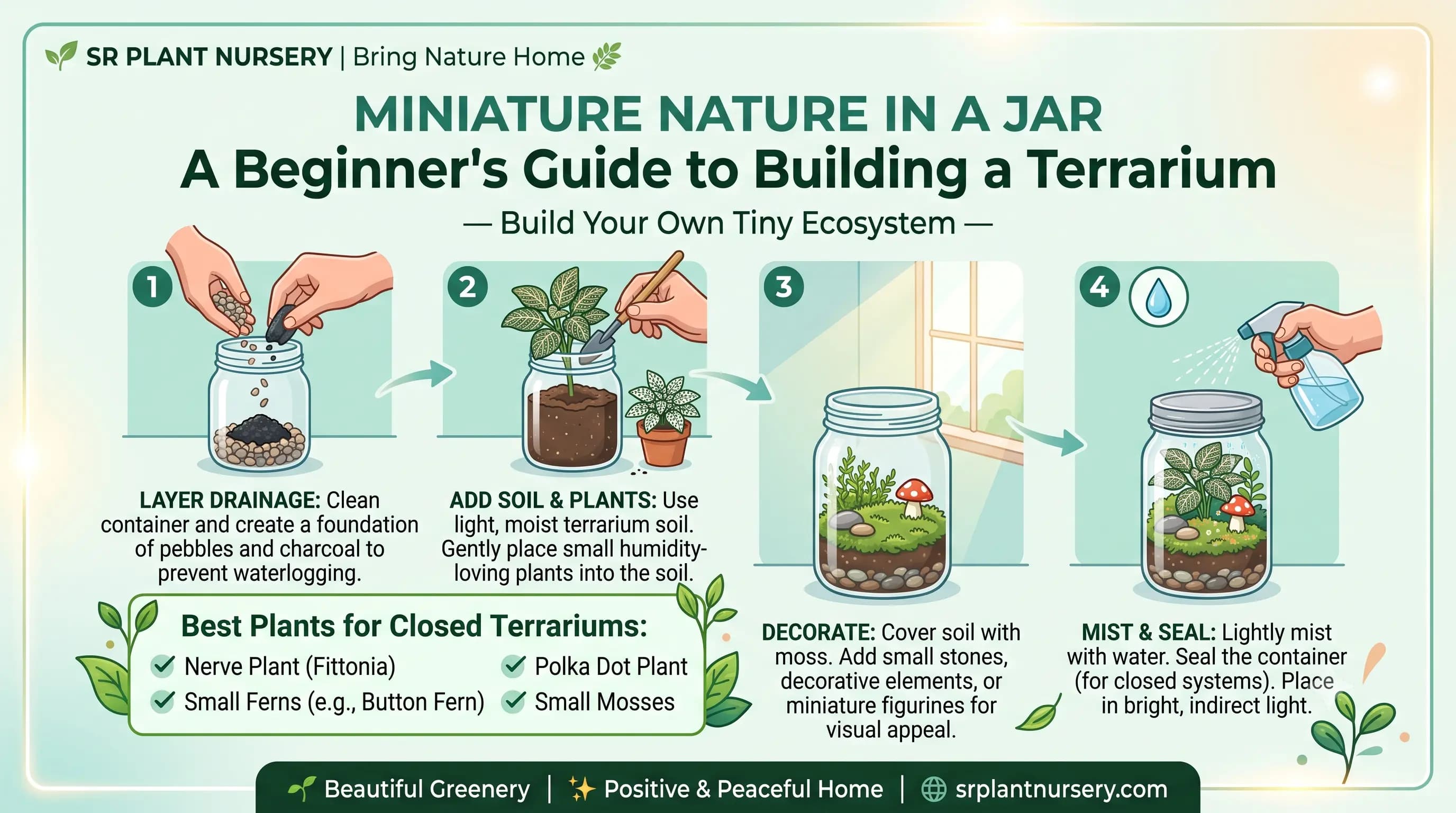
Creating your miniature world is a rewarding process. Here’s a list of essential materials:
- A Glass Container: A clear jar with a lid is ideal for closed terrariums (e.g., mason jars, cookie jars, old fish bowls).
- Drainage Layer: Small pebbles or gravel to prevent waterlogging.
- Activated Charcoal: A thin layer to keep the ecosystem fresh and prevent mold and odors.
- Substrate: High-quality potting soil appropriate for your chosen plants.
- Small Plants: Choose humidity-loving, slow-growing plants like ferns, mosses, Fittonia, baby tears, or small succulents for open terrariums.
- Decorative Elements (Optional): Small stones, twigs, miniature figurines, or shells to personalize your creation.
- Tools: Long tweezers, a small scoop or spoon, and a spray bottle for misting.
Step-by-Step Guide to Building Your Terrarium
- Clean Your Jar: Ensure your glass container is sparkling clean and dry.
- Add Drainage Layer: Place a 1-2 inch layer of pebbles or gravel at the bottom.
- Charcoal Layer: Add a thin layer (about 1/2 inch) of activated charcoal over the pebbles.
- Soil Layer: Gently add 2-3 inches of potting soil. Create small depressions for your plants.
- Planting Time: Carefully remove plants from their nursery pots, shake off excess soil, and plant them in the prepared depressions. Use tweezers for delicate placement.
- Watering & Decorating: Lightly mist the plants and soil with water. Add any decorative elements you desire.
- Seal It Up: If creating a closed terrarium, put the lid on. For open terrariums, leave it uncovered.
Caring for Your Miniature Ecosystem
- Light: Place your terrarium in indirect light. Direct sunlight can cook the plants inside.
- Watering: Closed terrariums rarely need watering – look for condensation on the inside. If there's no condensation for a few days, mist lightly. Open terrariums will need more frequent, light watering as the soil dries out.
- Pruning: Trim any plants that grow too large or begin to rot to maintain the balance of your ecosystem.
- Ventilation (Closed Terrariums): Occasionally open the lid for an hour or so if excessive condensation builds up or if you notice any mold.
Creating a miniature nature in a jar is a journey into a tiny, self-sustaining world. With a little care and creativity, you can enjoy this beautiful piece of living art for years to come.
Related Articles

Shop Related Plants
Bring the ideas from this article to life in your own home.
Looking for something specific?
Search our entire catalog of premium indoor and outdoor plants.